How Fashion and Jewellery Are Displayed in Museums
Museum displays balance visual storytelling with the care of fragile garments and gemstones. Learn what to notice in their presentation.
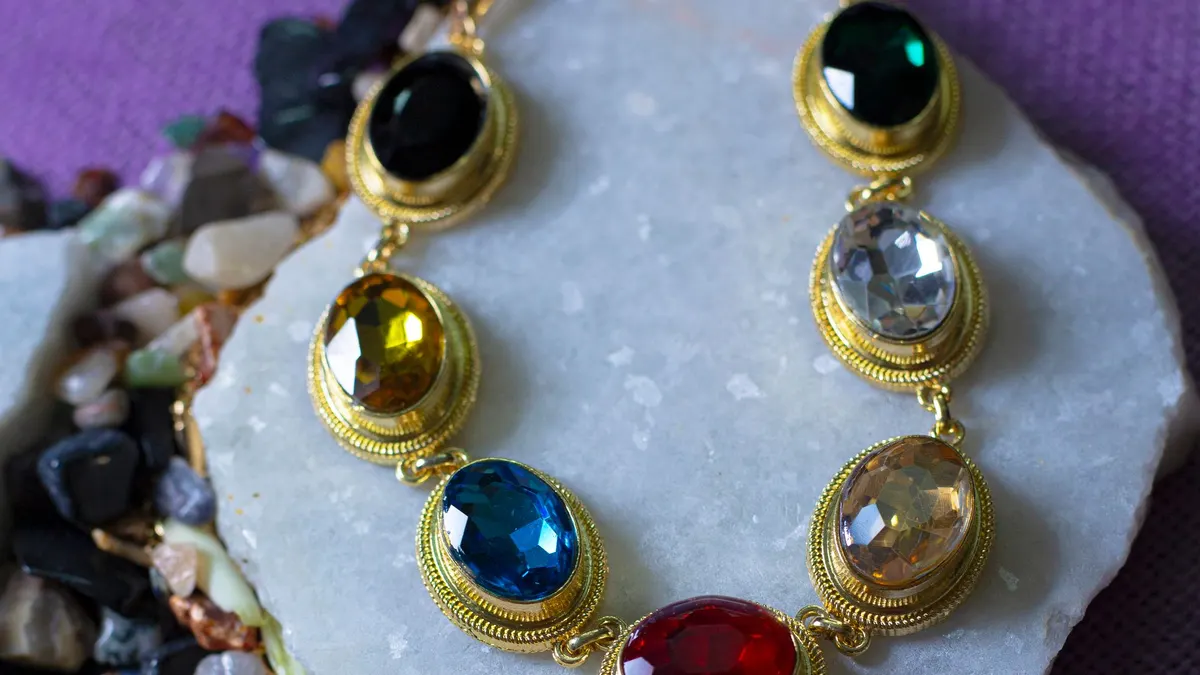
Fashion and jewellery exhibitions bring objects made to be worn into a setting where they are viewed at close range, often behind protective barriers. A garment that once moved with its wearer may appear still and sculptural; a jewel may be arranged to reveal its cut, colour or relationship to clothing. Display choices shape what visitors notice, while conservation requirements limit how objects can be shown.
Garments, mannequins and movement
Clothing is commonly presented on a mannequin shaped to support its structure without placing unnecessary strain on seams, fastenings or fragile fabric. The form beneath a garment affects its silhouette: a narrow support can make a coat appear sharply tailored, while a fuller shape may suggest the volume of a skirt. Some displays use mounts beneath the fabric, or position an item flat when wearing it would risk damage.
Stance and spacing also influence interpretation. A turned shoulder, bent arm or slight separation between layers can suggest how a garment falls on a body. Where possible, displays may show details from several angles, such as a decorated back, an interior lining or a fastening. Accessories can indicate how an outfit was assembled, though a nearby object is not necessarily part of the same original ensemble.
Showing jewellery and precious materials
Jewellery is often displayed on small stands, padded forms or within cases that restrict handling. The arrangement can reveal how a piece sits against the body, how its parts connect and whether it was designed to be worn in a particular way. A necklace may be curved around a support rather than laid flat, while a brooch may be tilted so its surface catches the eye.
Gemstones respond to their surroundings. Their appearance changes with the direction and colour of light, the angle of viewing and the background behind them. A dark setting may emphasise a pale stone, while a neutral mount can make metalwork easier to read. Reflections may reveal facets, but excessive glare can obscure detail. Cases therefore balance visibility with protection from touch, dust and environmental changes.
Light, climate and conservation
Light can fade dyes and weaken some fibres, so delicate textiles are often kept in subdued conditions or shown for limited periods. Sensitive materials may require especially careful control, and displays can use barriers to reduce contact and exposure. Temperature and humidity also matter: changes can cause materials to expand, contract, warp or become brittle.
These limits explain why an exhibition may feel dim, why some objects are shown in rotation, or why a case contains only a small selection. Conservation decisions are not simply aesthetic. They aim to preserve objects while allowing visitors to examine them, and may affect how long a display remains in place or which features can be illuminated.
Reading the exhibition
Visitors can look beyond the most eye-catching surface. Notice how a sleeve is supported, where seams and fastenings sit, and whether a textile has been arranged to show its lining or construction. For jewellery, observe the setting, clasp, joins and relationship between stones and metal. The nearby text may explain materials, use, social meaning or the reasons an object has been grouped with others.
Compare the object with its surroundings: a mannequin's pose, the distance between pieces and the direction of light all guide attention. A display is an interpretation rather than a neutral arrangement. Reading both the object and its presentation can make visible the balance between fashion as something worn, jewellery as something handled, and museum care as a constraint on how each can be seen.
More articles
 Craft and display
Couture Styling for an Editorial Shoot
Couture styling for an editorial shoot balances careful garment handling with precise fitting, considered poses and close collaboration with the photographer.
 Craft and display
Framing and Cropping Fashion Photographs
Framing and cropping direct attention in fashion photographs. Sequence and captions then shape how viewers read a series.
 Craft and display
How Fashion Showcases Shape the Presentation of Looks
Fashion showcases bring clothing together in a planned presentation. Their format and pacing distinguish them from editorials and campaigns.