AI-Generated Jewellery Concepts in Everyday Scenes
Generative jewellery images bring gemstones into everyday scenes. Scale, light and careful styling help the accessories remain convincing.
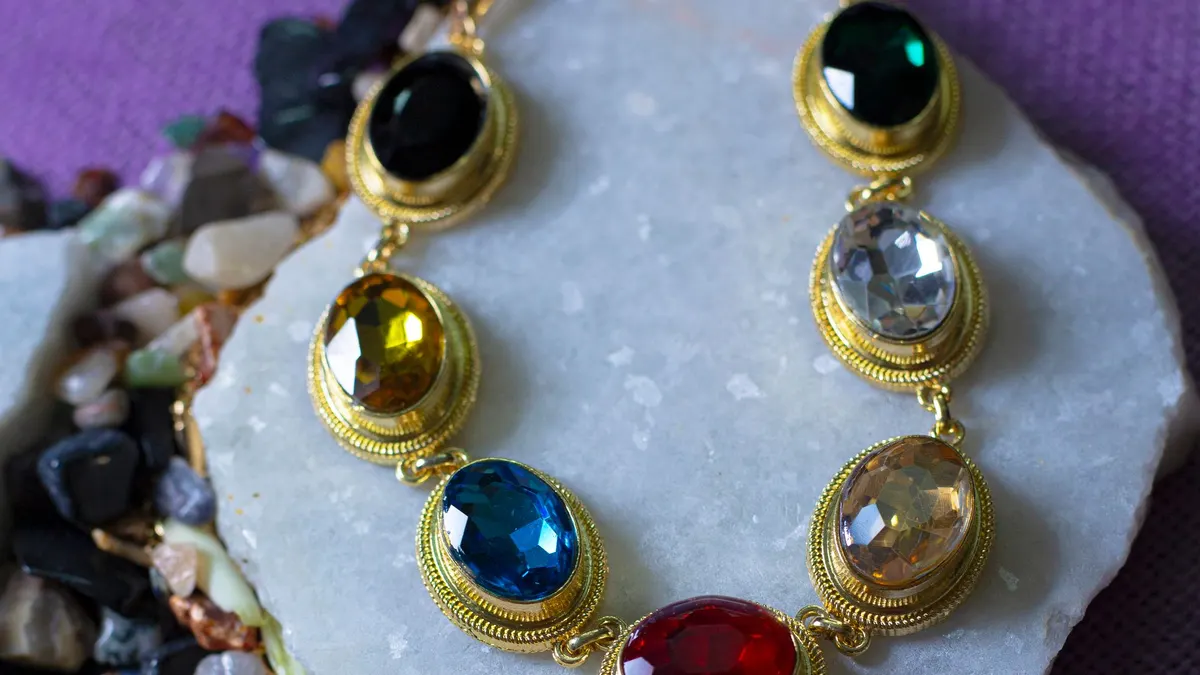
Generative images can place fine jewellery in settings far removed from a formal display: a ring beside a cup, a pendant resting on folded fabric or earrings catching the light during an ordinary morning. This contrast gives a concept its character. The challenge is to make the scene feel playful or familiar without making the jewellery seem implausible, oversized or detached from its surroundings.
Everyday settings and visual contrast
A familiar object can provide context for a gemstone. A small jewel beside a piece of fruit, stationery or a household dish invites the viewer to compare materials and scale. The setting should support the idea rather than compete with it. Too many props can make the image feel like a puzzle, while a restrained arrangement allows the jewellery to remain the visual focus.
Humour often comes from a simple mismatch: a precious-looking object in an unexpectedly casual situation. It works best when the joke is easy to read and does not depend on distorting the jewellery. An earring may appear to rest on a breakfast table, for example, but its form should remain recognisable as an earring rather than becoming a decorative shape with no clear use.
Scale and believable proportions
Generative systems may alter the size of objects, especially when a jewel sits close to a large prop or occupies an unusual position. A gemstone can become implausibly broad, a chain may thicken into a cord, or a ring may lose the proportions needed to fit a finger. These errors interrupt the scene because the viewer has familiar expectations of how jewellery is worn and handled.
A stylist checks the piece against nearby objects and the body. The width of a band, the length of a pendant and the size of a fastening should make sense together. If a hand is shown, the ring should sit naturally on a finger, with a plausible fit and orientation. Scale can be exaggerated deliberately for a surreal concept, but the image then needs other cues that make the exaggeration feel intentional.
Light, surfaces and gemstone detail
Jewellery depends on light, but sparkle alone does not make a stone convincing. Reflections should correspond to the scene’s light sources and surrounding surfaces. A bright glint may appear on a polished setting, while the gemstone itself usually needs a mix of highlights, colour and darker facets. Uniform glow can flatten the stone and make it look like glass or a light source.
Different materials also require distinct treatment. Metal reflects its environment in sharper shapes; a gemstone may show colour through its depth; fabric tends to soften highlights. The shadows beneath a ring or pendant help anchor it to a table or cloth. If the object seems to float, or its reflections point in different directions, the image loses physical credibility.
Stylist checks before using a concept
Review begins with the object’s basic construction: whether settings hold the stones, links join correctly and closures appear usable. The stylist then checks contact points, shadows, reflections and the relationship between jewellery, body and props. Cropping matters too; a partially hidden clasp or an awkwardly cut chain can suggest that the object has been assembled incorrectly.
Generative imagery is useful for exploring mood, composition and visual contrast, but it does not guarantee accurate product detail. A concept image can communicate an atmosphere while leaving some construction unresolved. Clear separation between imaginative styling and dependable visual information helps viewers understand what the image is intended to show.
More articles
 AI imagery
AI Fashion Weeks and Sustainable Collection Planning
AI can help plan collections around available fabrics and present concepts digitally, while physical garments remain essential for testing and wear.
 AI imagery
Building an AI Fashion Editorial from Research to Image
An AI fashion editorial can translate trend research into a visual sequence, while careful selection and retouching preserve a clear creative point of view.
- AI imagery
Planning an AI-Enhanced Fashion Film
An underwater-inspired fashion film can combine practical effects with generated imagery. Planning keeps the mood, garments and story coherent.